


Get Higher Education at a Spanish University or College


6 reasons to choose Spanish universities
Who can expect successful admission to universities in Spain



Feedback from our clients
Thank you for your consultation! It was important to choose the best school for our child, so we will prepare for…

I got my student visa! Thank you so much for your help! I’m so glad I turned to you! I will…

Good afternoon, yes, the consultation went very well. I considered faculties in Madrid, Valencia, and Zaragoza, but decided to apply to…

I received a student visa to study for a master’s degree. Thank you. It was a pleasure working with you. I…
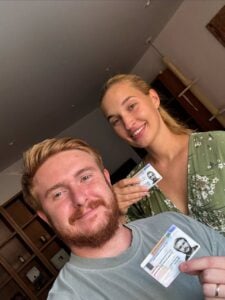
We applied as digital nomads in Spain with the help of El Relocator. Throughout the entire process, the team helped and…
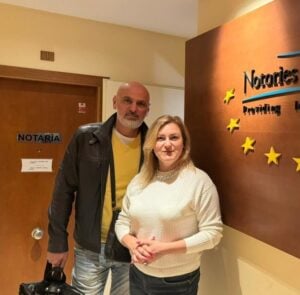
Larisa, we want to say a huge thank you for your professional approach to your work and your kind attitude towards…

Basic requirements for admission to universities in Spain
There are not many English-language programs in this country, and they are mainly offered by private business schools. Examples of available specialties in English: marketing, communications, tourism, primary education, economics, journalism.
Average English language requirements: TOEFL from 80-87, IELTS from 6.0-6.5. To confirm proficiency in Spanish, you need to get a DELE certificate – at least 60 points out of 100, with at least 30 points out of 50 in each section. Examples of universities with a good English-language program: Global Business School (Barcelona) and Marbella University (Malaga).
How do I apply?
We will take you by the hand from choosing a university to submitting a visa application
Selection of universities
- We will select universities and programs that best match your dreams, desires and talents.
Preparation of documents
- Let's begin with the consistent and meticulous preparation of all the necessary documents.
Preparing for the journey
- We will submit requests to universities and at the same time begin searching for housing.
Submission of documents for a residence permit
- We will receive approval from the university, a housing contract and submit documents for a residence permit.
Moving:
- We will meet you on site, help you to go through all the formalities and get settled.
To enroll in a university in Spain, you will need a language certificate - English or Spanish, depending on the language of the program and the requirements of the university. International exams such as DELE, SIELE, IELTS or TOEFL are suitable - universities indicate the required level on their websites.
You also need to go through the homologation procedure - recognition of your certificate or already received diploma in Spain:
- Affix an apostille to the educational document,
- Make a sworn translation into Spanish,
- Submit an application for homologation.
Please note: the exact list of additional documents may vary depending on the university and the chosen program. Be sure to check the current information on the website of a specific educational institution.
We can help you at every stage - from preparing documents to submitting them.
Make an appointment at the consulate in Moscow or St. Petersburg at least 2 months before your travel date. The average processing time for a student visa to Spain is 2-4 months.
For complete information on obtaining a student visa, we recommend reading our guide.
Not sure where to start the process?
Admission to state universities
Select universities in one or more provinces of Spain and identify the specialties you are interested in. It is recommended to indicate up to 11 specialties within 1 province in order of priority for you.
Once we have selected a university and a course, you will need to pay a fee to reserve your place. You will receive confirmation of payment and the opportunity to choose the subjects you will study during the academic year.
For programs accredited by the Ministry of Education, homologation of your previous diploma is required.
If you want to enroll in a program with a high passing score (medicine, business in English), but are not yet ready for competition, the best solution would be to choose a program to prepare for entering a university. They focus on specialized subjects, which will increase the chances of passing exams and improve your knowledge of Spanish. In addition, you will have time to complete the homologation process and enter the desired faculty without stress.
There are a lot of nuances, because each province has its own admission criteria.
It is possible to enter a state university on your own, but the main thing is not to get confused and not to miss something important. Therefore, we offer you a 15-minute free consultation right now to assess the reality of admission and understand the admission algorithm in your case.
Admission to private universities and business schools
Explore different private universities and business schools. Pay attention to the admission requirements and features of each school.
Once you have selected the universities, apply for admission to them. This may involve filling out online forms, taking tests, providing the necessary documents such as academic certificates, letters of recommendation and essays, and paying application fees. For creative fields, schools will ask for a portfolio of your work.
If the universities you choose conduct interviews, prepare for them. Develop answers to typical questions, demonstrate your professional and personal qualities.
Once the application process is complete, wait for the results. If you are successfully accepted, follow the instructions to confirm your place and pay for your studies.
Admission to private universities differs from admission to state universities.
You apply to the institution itself. In this case, it is important to prepare the correct package of documents and prepare for the subsequent interview.
Each educational institution has an individual process. We will accompany you in the process of collecting documents, prepare you correctly for the interview and wait for successful admission to the university.
Which universities can I apply to?
Example of universities in Spain where El Relocator’s clients enroll
(the cost of tuition per year is indicated).



Price
Consultation with an expert
Admission to a private/international school
for 1 child
for 2 children
- Selection of schools based on your criteria;
- Calling educational institutions to check availability of places;
- Support during enrollment;
- You also receive unlimited consultations and an individual admission plan.
Admission to private technical schools for vocational education
- Selection of technical schools taking into account the chosen specialty;
- Communication with educational institutions to clarify the availability of places;
- Support during enrollment;
- We also provide unlimited consultations and develop an individual admission plan.
Admission to a private university
- Unlimited number of consultations;
- Insurance;
- Development of an individual admission plan;
- Bachelor's degree: there are two options for admission;
- Master's degree: there is one main and one reserve option.
Admission to a state university
- Assistance with admission to public universities;
- When applying for a bachelor's degree, you can choose up to 11 programs in one region;
- We submit applications to all selected areas at the same time to increase the chances of admission;
- When applying for a master's degree, it is possible to apply simultaneously to 3 programs in one province.
Why El Relocator is the best choice for higher education plan

Our experts have been endorsed by the Spanish language schools association Fedele, a sign of the highest standards in education that will make your school days truly special.
Our experts have been working in the education sector in Spain for 23 years. In 2004, they were the first to receive consular accreditation for study visas. Their experience is your success.
Get free consultations at all stages of your journey. We are not just an agency, we are your guide and advisor in the world of Spanish education.
You will no longer have to look for other guides to the world of Spain - we can do everything: Schengen or student visa, select a school and even convert a student permit into any other type of residence permit.
Our team









You can read about the program requirements in our mini-guide to student visas


Frequently asked questions about student visa
If you have any questions, please write to us!
- Bachelor's degree — for 4 years
- Master's degree — 1–2 years
- Language courses — with the possibility of one renewal
Yes, some universities offer English-taught programs, especially in fields such as business, international relations, and engineering. However, English language courses do not qualify for a student residence permit.
Average English language requirements: TOEFL 80–87, IELTS 6.0–6.5.
To prove Spanish language proficiency, you’ll need a DELE certificate — minimum 60 out of 100 points, with at least 30 out of 50 in each section.
- High school diploma with apostille
- Academic transcript
- Course description or curriculum

