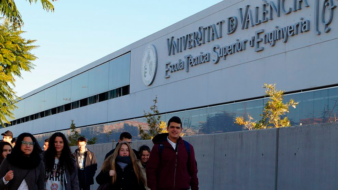
Student visa for language courses in Spain

 12/05/2025
  Reading time: 5 min
 Student visa in Spain for language school studies: a guide


Language courses are the simplest way to live in Spain legally, learn Spanish by full immersion and avoid long commitments. Study at an accredited language school is grounds for a student visa, and a course of 6+ months is grounds for a student residence permit (TIE) once in Spain. Below — how to choose a school, which visa you need, how much money to show, and what a day on the course is really like, no gloss.
- Choosing a schoolInstituto Cervantes accreditationWithout it you can't apply for a student visa.
- Course under 6 monthsD visa, no permitRequested at the visa centre.
- Course 6 months to a yearstudent TIEArranged inside Spain.
- Money on account≈ €7,200 (100% IPREM)For the year, plus proof of paid course.
- Format≈ 4 hours/day, Spanish onlyCommunicative method, full immersion.
How to choose a language school
You can find a school yourself or through an agency — the latter sorts the options, books your place and prepares the visa documents. We also help pick an accredited school and handle it end to end. What to check:
- Instituto Cervantes accreditation — without it you can't request a student visa. The single most important criterion.
- Reviews — lots of complaints even at a high rating is a warning sign.
- Location — proximity to the centre, metro, the district that suits you.
- Cultural programme — study takes ~5 hours a day; a school with excursions and clubs is a plus.
- School housing — locals rent reluctantly to a foreigner without residence, so an organiser's option eases the start.
- Price — cheapest isn't worst. For reference: a 32-week course in Valencia is around €3,800.
Which visa you need
| Course length | What to arrange | Where |
|---|---|---|
| Under 6 months | D visa (no later permit) | Visa centre |
| 6 months to a year | D visa → student TIE | Visa abroad, TIE in Spain |
For the D visa, besides proof of a paid course you need: a medical certificate, a criminal-record certificate from all countries of residence over 5 years, a bank statement of about €7,200 (100% IPREM for the year), insurance and the fee. The medical and criminal-record certificates need a sworn translation in Spain or consular legalisation. After the permit is approved you give fingerprints and get the TIE card.
Housing: three options
Private bathroom and kitchen, privacy. Downside — price: a studio runs €400 (Seville) to €1,100 (Barcelona) a month, and less immersion in local life.
Cheaper (€200–400/month) and closer to real Spanish life — but you share the fridge and kitchen.
A room with shared facilities is about €140/week, en-suite €190/week. Easy to arrange, but pricier. With a packed schedule you'll mostly be home just to sleep.
What a day on the course looks like
The standard load is 20 hours a week: every weekday 9–14 with a break — about 4 hours of Spanish daily. Afternoons bring modules: DELE prep, business Spanish, conversation and film clubs. The method is communicative: grammar and word meanings are explained in Spanish from the start, no translation into your language — through dialogues, games and listening. No cramming or long written translations. Little homework, no grades usually, but attendance is tracked: miss more than 20% of the course and you won't get the certificate you need to renew the permit.
What comes next: certificate and DELE
If you keep up attendance and grades, the school sends a certificate of the levels completed a couple of weeks after the course. Then either continue, or sit the DELE exam: its diploma is issued by the Ministry of Education, recognised internationally and never expires (a plain school certificate isn't). Levels run A1 to C2 on the CEFR; A2 is needed for citizenship, B2 for university. Where to go after courses and which permit lets you stay longer — in the residence permit guide.
Frequently asked questions
Official sources:
• Consulado de España — study visas
• Instituto Cervantes — school accreditation