


10 главных ошибок при получении визы Digital Nomad в Испанию (и как их избежать)


 19/10/2025
 Время чтения: 3 мин
10 главных ошибок при получении визы Digital Nomad в Испанию (и как их избежать)

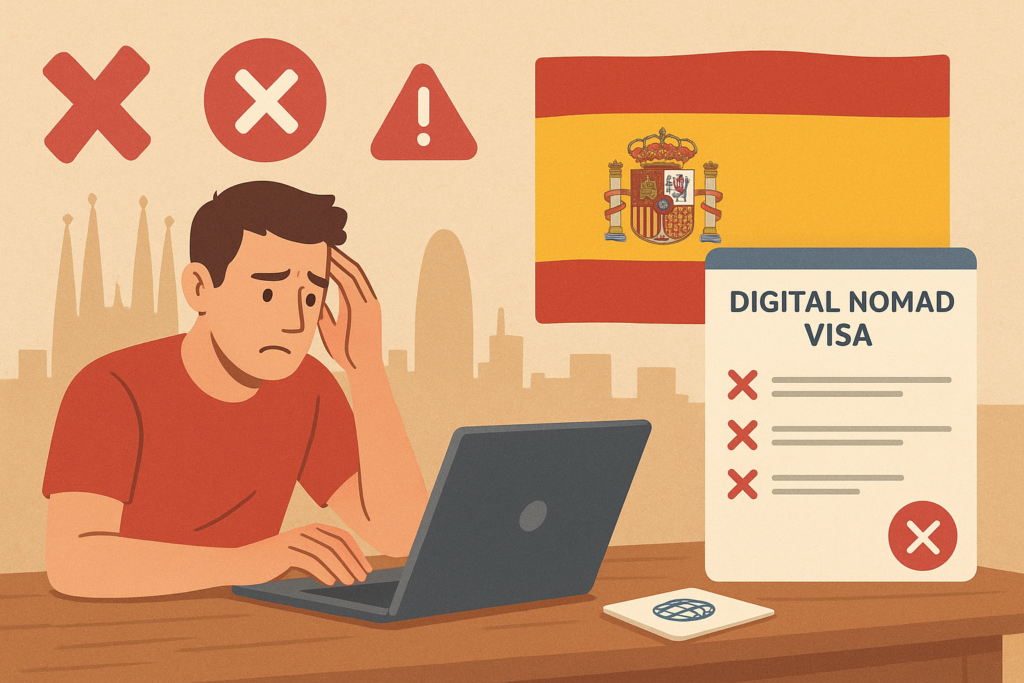
- Доход200% SMI = 2 849 €/месПодтверждать стабильно: выписки за 3–6 мес., контракт, инвойсы.
- Страховкаполная, без сооплатТревел-полис не подходит — частый повод для отказа.
- Где подаватьконсульство или UGE-CEИзнутри Испании — быстрее, нужна цифровая подпись.
- Стаж/связь с работодателем3+ года или профильный дипломКомпания должна существовать 1+ год.
- Документыапостиль + присяжный переводСправка о несудимости за страны проживания 2+ лет.
ВНЖ кочевника 2026: где ошибаются — коротко
- Доход200% SMI = 2 849 €/месПодтверждать стабильно: выписки за 3–6 мес., контракт, инвойсы.
- Страховкаполная, без сооплатТревел-полис не подходит — частый повод для отказа.
- Где подаватьконсульство или UGE-CEИзнутри Испании — быстрее, нужна цифровая подпись.
- Стаж/связь с работодателем3+ года или профильный дипломКомпания должна существовать 1+ год.
- Документыапостиль + присяжный переводСправка о несудимости за страны проживания 2+ лет.
Источники: BOE — Ley 28/2022 de Startups, UGE-CE — портал подачи заявлений.
В 2026 году получение ВНЖ в Испании по программе виза цифрового кочевника – простая и понятная процедура. Но только если собрать актуальный пакет документов и соответствовать обновленным критериям. Многие заявители продолжают совершать типовые ошибки на этапе сбора документов и подачи, которые становятся причиной задержки или отказа. Чтобы успешно получить ВНЖ Digital Nomad Испания в 2026 году необходимо правильно подтвердить финансовую состоятельность, выбрать правильную страховку и учесть нюансы подачи документов в консульстве или UGE-CE (Unidad de Grandes Empresas y Colectivos Estratégicos) в Испании, если пребываете в стране легально. Для удаленных работников и фрилансеров ВНЖ ЕС для цифровых кочевников, особенно Испании – это открытые двери в Шенгенскую зону и право на специальный налоговый режим. Давайте разберем, как пройти этот путь без проблем. Мы расскажем о 10 самых распространенных ошибках, которые допускают соискатели ВНЖ кочевника в Испании, и предоставим пошаговые решения, чтобы ваш переезд прошел максимально гладко.
Ошибка №1: неправильное подтверждение дохода для ВНЖ digital nomad
Самая частая причина отказа в ВНЖ кочевника Испании – неверное или недостаточное подтверждение финансовой состоятельности заявителя. Законодательство Испании требует, чтобы основной заявитель демонстрировал доход, эквивалентный 200% от SMI (SMI – минимальная межпрофессиональная заработная плата Испании). В 2026 году ожидаемой суммой будет 2849 € в месяц (до вычета налогов). Как правильно подтвердить доход цифрового кочевника Испании в 2026 году:
Тип заявителя
Ошибка (что делать НЕ надо)
Решение (что сделать ОБЯЗАТЕЛЬНО)
Фрилансер (Самозанятый)
Предоставить только выписки с личного счета без подтверждения контрактов или стабильности поступлений
Предоставить действующие контракты с иностранными компаниями (на срок от 3 месяцев) и банковские выписки, подтверждающие стабильный доход за последние 3 месяца
Наемный сотрудник (Удаленный работник)
Предоставить только справку о зарплате без разрешения от работодателя на удаленную работу
Предоставить трудовой договор и письмо от работодателя, разрешающее работу из-за границы, а также гарантирующее сохранение рабочего места и условий работы
Одиночный заявитель (без семьи)
Демонстрировать доход, близкий к минимальному порогу
Демонстрировать доход с запасом (на 10-20% выше минимума, т.е.3150 €), чтобы учесть колебания курсов валют и избежать лишних вопросов
Заявитель с семьей
Демонстрировать доход, не соответствующий требованиям для соискателей ВНЖ цифрового кочевника, желающим оформить его также для членов семьи
Демонстрировать доход на 10-20% выше 2849 € на себя + 1068 € за партнёра и +356 € за каждого ребёнка
Помните, что ВНЖ Испании Digital Nomad требует не только соответствия минимальному финансовому порогу, но и демонстрации стабильности поступлений и долгосрочных рабочих отношений. Спецификация работы, роль, должностные обязанности, структура дохода и связь с иностранным работодателем в 2026 году оцениваются тщательнее.
Ошибка №2: выбор неподходящей страховки для визы цифрового кочевника “в найме”
Вторая критическая ошибка – покупка в целях экономии обычного туристического страхового полиса, который не соответствует строгим требованиям для получения ВНЖ кочевника в Испании. Если вы подаетесь как кочевник в найме, ваша медицинская страховка должна отвечать трем ключевым требованиям, иначе ВНЖ Digital Nomad Испания НЕ будет одобрен:
- комплексное покрытие: полис должен включать полное медицинское покрытие на территории Испании;
- отсутствие доплат (Sin Copagos): это критически важное требование. Страховка должна быть "без доплат", что означает, что вы не должны будете платить за визиты к врачу или процедуры (за исключением стоматологии);
- срок действия: полис должен быть оформлен на весь срок действия запрашиваемого ВНЖ (обычно 1 год с продлением).
Помимо условия без доплат (Sin Copagos), убедитесь, что полис не имеет периодов ограничения на использование услуг в первые месяцы (Carencia). Страховка для ВНЖ должна давать доступ к госпиталям с первого дня действия договора. Выбирайте только те испанские страховые компании, которые хорошо знакомы с требованиями миграционного законодательства Испании, чтобы избежать отказа на финишной прямой.
Ошибка №3: Неправильный набор документов для фрилансера и наемного сотрудника
Оба типа заявителей могут претендовать на ВНЖ кочевника в Испании, но пакеты документов для фрилансера (самозанятого) и наемного сотрудника кардинально различаются, что часто приводит к ошибкам.
Категория документов
Для наемного сотрудника (Remote Employee)
Для фрилансера (Самозанятого)
Основа деятельности
Трудовой договор (указание на возможность удаленной работы)
Договор оказания услуг с иностранным юрлицом
Документ о соцпокрытии
“Свидетельство об отъезде” из СФР или сертификат А1 из соцстраха ЕС (зависит от страны регистрации работодателя)
Обещание открыть ИП в Испании
Частная медицинская страховка
Нужна, с полным покрытием и без доплат
Не нужна
Для фрилансеров ключевым фактором после одобрения является регистрация в регистре самозанятых (Reta). Даже при наличии частной страховки, работа в Испании обязывает к выплате взносов в Seguridad Social, что в будущем дает право на государственную медицину и пенсионные баллы Необходимо помнить, что цель программы ВНЖ Digital Nomad – привлечение иностранного капитала, поэтому в обоих случаях необходимо доказать, что вы работаете на компании, зарегистрированные вне Испании.
Ошибка №4: Игнорирование обязательств по налогам
Многие соискатели ВНЖ кочевника Испании фокусируются исключительно на получении самого разрешения, забывая, что после переезда могут стать налоговыми резидентами, что может существенно увеличить их налоговую нагрузку. Испания признает вас налоговым резидентом, если вы находитесь в стране более 183 дней в году. Для цифровых кочевников (digital nomad) Испания предоставляет специальный налоговый режим – "Закон Бекхэма", но он доступен только для кочевников в найме. Ключевые аспекты налогового режима:
- Подача заявки на режим: если не подать заявку на режим Бекхэма в течение 6 месяцев после получения ВНЖ, вы теряете на него право.
- Ставка налога: вместо прогрессивной ставки режим позволяет платить фиксированный налог в 24% с только трудового дохода в течение первых 6 лет.
- Международный доход: основное преимущество – возможность не платить испанские налоги с пассивных доходов, полученных за пределами Испании (что выгодно для владельцев бизнеса, получающих дивиденды).
Своевременное обращение к налоговому консультанту, который поможет с подачей заявления на режим Бекхэма, является ключевым условием финансовой выгоды от номад ВНЖ Испания.
Ошибка №5: Неправильная легализация документов (апостиль/перевод)
Абсолютно все официальные документы, выданные не в Испании, должны быть легализованы: апостилированы и переведены на испанский язык присяжным переводчиком. Если пренебречь апостилированием и переводом – получите немедленный отказ в ВНЖ Испании digital nomad. Обязательные требования к легализации:
- Апостиль или консульская легализация: основные документы (справка о несудимости, диплом и т.д.) должны быть заверены апостилем или легализованы в стране выдачи, если нет соглашения, которое освобождает от легализации.
- Присяжный перевод (Traducción Jurada): перевод на испанский язык должен быть выполнен присяжным переводчиком, аккредитованным Министерством иностранных дел Испании (MAEC). Обычные нотариальные или любительские переводы не подходят для ВНЖ ЕС для цифровых кочевников.
Проверьте, чтобы подпись и печать присяжного переводчика стояли на всех необходимых документах.
Ошибка №6: проблемы с получением NIE
Фатальная ошибка – недооценка сложности получения идентификационного номера иностранца – NIE, который обязателен для оформления ЭЦП. Для этого нужно посетить полицию Испании, а сделать это можно только по предварительной записи, что требует постоянного мониторинга сайта, так как свободные "окна" появляются редко. Лайфхак: подача через доверенное лицо. Поручите подачу ваших документов на ВНЖ миграционному юристу, который имеет опыт в таких процедурах. В этом случае номер иностранца (NIE) присвоят автоматически. Без NIE ваша заявка на ВНЖ Digital Nomad Испании не будет принята, даже если все документы идеальны. Получение NIE – это половина пути. Если вы подаетесь с территории Испании онлайн через платформу UGE-CE в 2026 году вам потребуется Certificado Digital (электронная подпись). Без нее вы не сможете удаленно подписать заявление и отслеживать статус рассмотрения заявки (Expediente) в реальном времени.
Ошибка №7: недооценка сроков и таймлайна
Заявители часто ожидают, что получение ВНЖ кочевника в Испании займет 1-2 месяца (иногда так и случается), что приводит к проблемам с арендой жилья, контрактами и билетами. Реалистичный таймлайн получения ВНЖ (в среднем, 2026 год):
Этап
Срок выполнения
Комментарий
Сбор и легализация документов
1 месяц
Апостиль и легализация занимают значительное время
Подача заявления (консульство или UGE-CE)
1 неделя (на запись в консульство)/1 день (подача в UGE-CE)
Зависит от доступности записи в консульство
Рассмотрение заявления
до 20 рабочих дней в UGE-CE или 1-3 месяца в консульстве
Срок может быть дольше при запросе дополнительных документов
Получение карты TIE (после приезда)
1,5 месяца
Отдельный процесс после въезда в страну. Зависит от наличия доступных записей в полицию
Важно различать получение визы D через консульство (на 1 год) и подачу на ВНЖ (на 3 года) непосредственно в Испании. Второй вариант в 2026 году остается приоритетным из-за скорости обработки заявок через электронный реестр. ВНЖ кочевника Испании – это долгосрочный процесс, требующий терпения и планирования не менее чем на 2,5-3 месяца.
Ошибка №8: справка о несудимости только из страны гражданства
Многие активно путешествующие заявители подают справку о несудимости только из страны своего гражданства. Это влечет отказ в получении ВНЖ digital nomad. Правильное решение: предоставить справки о несудимости из всех стран, где вы проживали больше 180 дней в год за последние 2 года.
Ошибка №9: не знать, что делать после приезда по визе D Digital Nomad (получение TIE)
Многие уверены, что после въезда по визе цифрового кочевника процедура закончена. Это ошибка. Получение пластиковой карты TIE (Tarjeta de Identidad de Extranjero) обязательно для всех виз, выданных на срок 6 месяцев и более. Если обращаться за этой услугой не в Мадриде или Барселоне, то критически важна для ее получения прописка (Certificado de Empadronamiento). Полиция не примет документы на TIE без актуальной выписки из мэрии по месту вашего фактического проживания в Испании. Оформите её сразу после подписания договора аренды Инструкция после приезда:
- Тайминг: подать заявление на оформление карты нужно в течение 30 дней после въезда в Испанию (по визе).
- Cita Previa: необходимо записаться в полицию для сдачи отпечатков пальцев.
- Получение TIE: карта TIE является вашим официальным удостоверением личности и подтверждает ваше право на статус цифрового кочевника в Испании.
Без карты TIE ваша виза не считается полностью легализованной в Испании. Критически важной для ее получения является Certificado de Empadronamiento (прописка), если город обращения не Мадрид или Барселона. Полиция не примет документы на TIE без актуальной выписки из мэрии по месту вашего фактического проживания в Испании. Оформите её сразу после подписания договора аренды
Ошибка №10: выбор города "вслепую"
Последняя ошибка, критически влияющая на качество жизни и стоимость номад ВНЖ Испании – неправильный выбор города. Краткий гид по выбору города для Digital Nomad:
Город
Основное преимущество
Налоговая специфика
Кому подойдет
Мадрид
Финансовый и бизнес-центр, крупнейшее сообщество экспатов
Самые высокие вычеты по подоходному налогу
Предпринимателям, которым важна инфраструктура и нетворк
Барселона
ИТ-хаб, высокое качество жизни, близость к морю
Действуют строгие правила по аренде (Ley de Vivienda), что влияет на бюджет
Фрилансерам и разработчикам (но выше стоимость аренды)
Валенсия
Оптимальное соотношение цены и качества жизни, низкий ИТ-налог
Благоприятная среда для оформления региональных налоговых льгот
Семейным парам и тем, кто ищет баланс между работой и жизнью
Малага
Развивающееся ИТ-сообщество, низкая стоимость жизни, южный климат
Низкая стоимость жизни при наличии офисов мировых гигантов (Google, Oracle)
Тем, кто предпочитает тепло и морской образ жизни
Канарские острова
Уникальная климатическая зона и статус ZEC (Особая экономическая зона).
IGIC 7% (вместо НДС 21%). Корпоративный налог 4% для компаний-резидентов ZEC
Предпринимателям и фрилансерам, нацеленным на максимальную налоговую оптимизацию
Выбор города влияет на стоимость жизни, налоговые обязательства и ваше сообщество, что важно для успешного функционирования ВНЖ Испании digital nomad. Избежать этих 10 ошибок при получении ВНЖ Digital Nomad Испании просто, если у вас есть надежный партнер, который контролирует все этапы процесса, от подтверждения дохода до получения карты TIE. Если хотите избежать всех этих ошибок — оформим ВНЖ кочевника под ключ: проверяем документы на каждом этапе.
Частые вопросы
Какая самая частая причина отказа в визе цифрового кочевника?
Неверное или недостаточное подтверждение дохода — минимальный порог на 2026 год привязан к SMI (минимальной зарплате в Испании) и регулярно меняется, поэтому важно проверять актуальную сумму перед подачей.
Куда подавать документы на ВНЖ цифрового кочевника?
В консульство Испании в стране проживания (если вы ещё не в Испании) или онлайн через UGE-CE (Unidad de Grandes Empresas y Colectivos Estratégicos), если уже находитесь в стране легально.
Источники: • BOE: Ley 28/2022, de 21 de diciembre, de fomento del ecosistema de las empresas emergentes • UGE-CE: портал электронной подачи заявлений
Один из документов, на котором спотыкаются заявители, — справка СФР (свидетельство об отъезде): как её оформить и апостилировать, разобрали отдельно.
Понадобится и апостиль справки о самозанятости — оформим под ключ.
Официальные источники:
• Ley 28/2022 (Ley de Startups) — ВНЖ цифрового кочевника
• UGE-CE — портал подачи заявлений

